Will energy prices rise?
Good news first: your electricity bill is likely about to drop. After years of painful increases, the numbers are finally moving in the right direction.
But there’s a catch — and it’s a big one.
One that’s starting to rear its head in more parts of the country: AI Data Centres.
The Good News: Cheaper Power Is Coming
In March 2026, Australia’s energy regulator released its proposed electricity pricing for 2026–27. If the draft becomes final, households could see bills fall by up to 10.1%, and small businesses by up to 21.2%. For a small business, that could mean more than $1,300 back in their pocket each year — the largest proposed reduction since the energy crisis of 2022.
Why is this happening? Largely because of renewable energy. For the first time ever, renewables supplied more than half of all electricity in Australia’s main grid during the last quarter of 2025 — a genuine milestone. More solar and wind means more cheap electricity flowing through the system, and that’s pushing wholesale prices down.
Large grid-scale batteries are helping too. The 850-megawatt Waratah Super Battery in NSW and the 300-megawatt Victorian Big Battery store up cheap solar energy during the day and release it in the evenings when demand — and prices — peak. The effect is a smoother, more stable power system.
From 1 July 2026, there’s also a new “Solar Sharer Offer” coming to NSW, South East Queensland and South Australia. It gives all customers — including renters — three hours of free electricity in the middle of the day, when solar generation floods the grid and power is effectively free to produce.
There is a caveat. The regulator, AER Chair Clare Savage, has flagged that the ongoing conflict in the Middle East is pushing global gas and coal prices higher. This could eat into the proposed savings before the final decision is locked in during May 2026, as the AER has noted this figure was calculated before the conflict began, and will be reassessed before their decision in May.
One thing working firmly in your favour is Australia’s massive uptake of rooftop solar and home batteries — that’s real, structural downward pressure on prices. How much of that actually shows up in your bill depends on what happens between now and May.
The Catch: AI Data Centres Are Coming and They’re Hungry
At exactly the moment Australia’s energy system is getting its act together, some of the world’s biggest tech companies are eyeing Australia as their next home for enormous “AI data centres.”
For many Australians, this isn’t an abstract policy debate. It’s already visible from their living room window. A recent ABC 7:30 report visited a quiet pocket of West Footscray in Melbourne, where residents now look out their windows at the hulking construction of a massive data centre next door.
“It’s just so imposing in every single way,” one resident said. “It makes me a bit sad, actually.”
When asked about community consultation before the project was approved, the answer turned negative: “not a lot. I would say minimal.”
| Watch the full story around the new West Footscray AI Data Centre on the ABC 7:30 Report. |
It’s a scene playing out across the country. Around 90% of Australia’s data centres are concentrated in Sydney and Melbourne, and there’s a full-scale race underway to build more. In Victoria alone, 40 data centres are already operating, with 11 fast-tracked by the state government. NextDC, one of the sector’s biggest players, recently secured approval for a near $1 billion AI facility in Port Melbourne in just 75 days. The state’s economic growth minister confirmed he had not received advice on how many data centres Victoria could actually absorb.
These aren’t your typical server rooms. Traditional data centres use roughly as much power as 10,000 homes. New AI-era “hyperscale” facilities can use as much electricity as a small city. One facility with that kind of capacity is already being planned for western Sydney. As one industry commentator put it in the ABC report: “I think data centres will be to the 21st century what the rail lines were to the 19th century.“ The comparison captures both the scale of the opportunity — and the disruption that comes with it.
Right now, all of Australia’s data centres combined use about 2% of our national electricity supply. But under official forecasts from the Australian Energy Market Operator (AEMO), that could grow at over 25% per year and reach around 6% of the grid by 2030 — with the amount consumed expected to triple this decade. Research by global consultancy Baringa, commissioned by the Clean Energy Finance Corporation, projects data centre capacity could grow roughly fourfold by 2035.
The Financial Review reports that in NSW alone, 22 new data centres have already been approved or applied for, with a combined capacity that could power over 1.1 million homes. 15 of these data centres have already been fast tracked.
What does this mean for your bill?
Look overseas for clues. A Bloomberg investigation found that in parts of the US near major data centre hubs, wholesale electricity costs have risen by as much as 267% over five years.
In Ireland, data centres drove 88% of all new electricity demand between 2015 and 2024 as reported by the Sustainable Energy Authority of Ireland. These data centres are also expected to make up nearly a third of Ireland’s total electricity use by the mid-2030s.
Goldman Sachs found that US electricity prices jumped 6.9% in 2025 — more than double the inflation rate — with data centres responsible for around 40% of electricity demand growth in a report by CNBC.
The ABC report also raised a concern that doesn’t get enough attention: backup power. The Melbourne facility featured in the story currently runs 40 diesel generators as a fallback when grid power is disrupted — a number set to more than double as the site expands. That’s not clean energy. It’s a reminder that the green credentials of data centres depend heavily on what actually powers them day to day.
Australia doesn’t have to follow the same path as the US or Ireland.
But it won’t happen automatically.
What the Government Is Doing About It
The Federal Government has noticed. On 23 March 2026, it released a framework of expectations for data centres coming to Australia. The core message: you’re welcome here, but you need to bring your own clean energy with you.
Under the framework, data centre operators are expected to:
- Fund new renewable energy to offset what they consume, rather than just plugging into the existing grid
- Cover the full cost of connecting to the grid, rather than passing those costs on to households and businesses
- Use energy efficiently and support grid stability
Energy Minister Chris Bowen put it plainly in a March press release: “Data centres have great potential to support our grid and expand new renewable investment, but it’s important we work together across jurisdictions and with industry to get the investment settings right so that we can continue to keep our system secure and energy prices low for all consumers.”
Projects that meet these expectations will be fast-tracked for government approvals. Those that don’t will face slower progress.
More than 70% of data centre energy loads are currently offset through power purchase agreements for solar and wind. That’s encouraging. But grid expert Rob Hammond on the 7:30 Report also warned that there are already too many data centres in the pipeline relative to available power— and the real bottleneck is the transmission infrastructure needed to get renewable energy from rural generation sites into our cities.
If the government’s framework actually sticks, there’s a real upside: AI data centres in Australia could end up funding a wave of new solar and wind farms, which would mean more renewable energy on the grid for everyone. However, whether enforcement holds firm is the key question to watch.
What Does This Mean for You as a Homeowner?
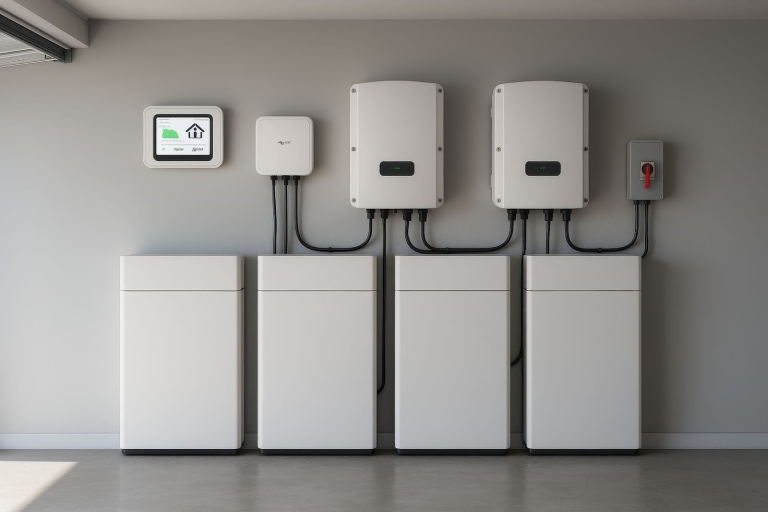
Whether the AI data centre boom in Australia drives prices up or the renewables transition keeps them down, one thing doesn’t change: households with solar and batteries are far better placed than those without.
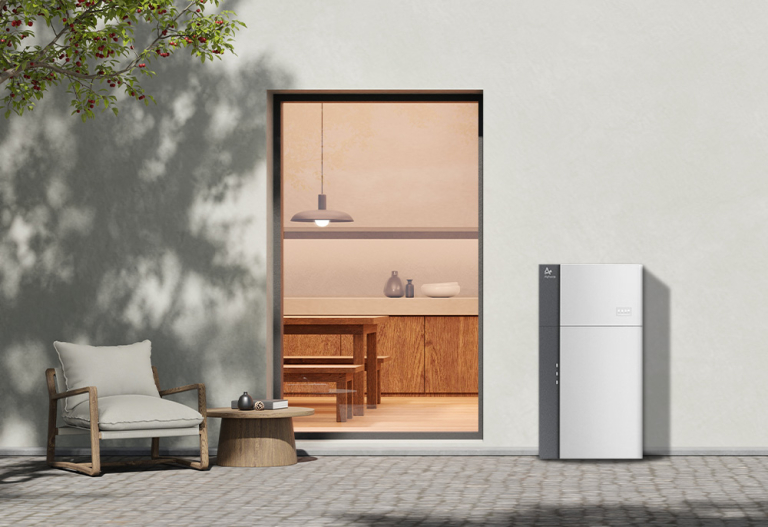
Here’s why. Midday electricity is now regularly very cheap — sometimes effectively free — because rooftop solar floods the grid while most people are at work. A home battery lets you capture that cheap energy and use it in the evening when grid prices are higher. You’re no longer fully exposed to whatever is happening with global gas markets, government policy, or how many data centres are built down the road.
This is especially relevant to suburbs in Sydney and Melbourne, where the largest concentration of new data centers have already been approved for development.
Australia has already seen a record surge in home battery installations, and the economics only get stronger as wholesale prices become more volatile. The grid is increasingly a tool to complement your own energy setup, not the only option you have.
The Bottom Line
Here’s a simple summary of the forces at play right now:
| What’s happening | Effect on your bill |
| More renewables and big batteries on the grid | ↓ Pushing prices down |
| AER’s draft pricing decision | ↓ Up to 10.1% reduction proposed |
| Middle East conflict / fossil fuel exposure | ↑ Risk of prices rising |
| AI data centre demand growth | ↑ Risk of prices rising |
| Government’s “bring your own renewables” framework | ↔ Could offset the risk — if enforced |
| Your own solar and battery system | ↓ Saves money regardless of what the grid does |
The final pricing decision from Australia’s Energy Regulator (AER) lands in May 2026.
Between now and then, and for years beyond, the households and businesses that have taken control of their own energy are the ones best positioned to weather the uncertainty — whatever direction things go.
Interested in what a solar and battery system could mean for your home? Speak to the Solar Battery Group team today.
Frequently Asked Questions
What is a Default Market Offer (DMO) in electricity?
The Default Market Offer (DMO) is a price cap set by the Australian Energy Regulator (AER) that limits how much electricity retailers can charge customers who are on a standing offer. That is, customers who haven’t actively chosen a market contract. Introduced in July 2019, the DMO was designed to protect consumers from being overcharged simply because they hadn’t shopped around. It applies to households and small businesses in New South Wales, South East Queensland, and South Australia. Think of it as a safety net: it doesn’t dictate what you pay, but it sets a ceiling on what retailers are allowed to charge those on default contracts.
How does the DMO affect electricity prices?
The DMO influences electricity prices in two key ways. First, it directly caps the standing offer rate, meaning retailers cannot set their default tariffs above the regulated limit: this protects disengaged customers from being significantly overcharged. Second, it acts as a reference price that all electricity offers must be quoted against, so when retailers advertise a discount (e.g. “22% below the DMO”), you have a consistent, apples-to-apples benchmark to evaluate how competitive a deal actually is. It’s worth noting, however, that the DMO is a ceiling, not a target. Many competitive market offers in the market sit meaningfully below it, so simply being under the DMO doesn’t mean you’re getting the best available deal.
When is a good time to start comparing different energy providers?
Honestly, the best time is right now but there are a few moments when it becomes especially worthwhile:
- When your current contract or benefit period is ending. Many market offers include discounted rates or conditional benefits (like pay-on-time discounts) for a fixed period. Once that period expires, you may roll onto less competitive rates without any notification.
- When the AER announces a new DMO rate. The DMO is reviewed annually (typically taking effect on 1 July each year). A rise in the DMO often signals broader market price movements, making it a smart trigger to reassess your options.
- After a significant change in your household. Moving home, adding solar panels, buying an electric vehicle, or changes in the number of people in your household can all shift your energy usage patterns enough to make a different tariff structure more suitable.
- If you haven’t compared in the last 12–24 months. The retail energy market is competitive and offers change frequently. A plan that was excellent two years ago may no longer be the best available.
A good starting point is the Australian Government’s Energy Made Easy website (energymadeeasy.gov.au), which is a free, independent comparison tool that benchmarks offers against the DMO so you can see exactly how much you could save.